This model offers high transparency, and the variability of Interchange fees means businesses can leverage lower fees for certain types of card types or transactions to optimize costs. However, the IC++ model can be relatively complex to understand, and its pricing is not entirely stable, as card networks generally update their fees twice a year.
02. Overview Visible Costs
1. One-time Access Fees, Annual fees, Monthly Fees
These fees are not mandatory in card acquiring, but many domestic acquiring companies charge: One-time setup fees, Annual fees. These fees are often applied to small merchants and function more like service fees, as early-stage merchants usually require more support and faster response times.
If you have
high expectations for service and responsiveness, starting with a domestic acquiring company may be a better option.
Overseas payment providers usually do not charge setup or annual fees, but may charge
monthly minimum fees to ensure baseline revenue from low-volume merchants. While they often have local account managers, core technical teams are usually
overseas, so issue resolution may be slower.
2. Processing Fees, Chargeback Fees, Refund Fees, Risk Management Fees, Rolling Reserve
Processing Fees: This is relatively simple. Credit cards usually have a "% + fixed amount", while local payment methods might only have a "%", which is suitable for low average order value products.
Chargeback Fees: Typically $10–$15 USD for acquirers, and $15–$25 USD for third-party payment providers.
Refund Fees: This also depends on the payment method. Generally, the processing fee is not refunded, but there's no extra refund handling fee. However, some payment methods may still impose an additional refund fee.
Risk Management Fee: Some third-party payment providers charge risk services as an additional cost.
Rolling Reserve: 5%~10% 180 Rolling Reserve. This is not exactly a fee but affects your cash flow, as having funds held by another party limits flexibility. Card networks do not mandate security deposits. Third-party payment providers, to control their own financial risk, will assess based on the merchant's historical transaction data, chargeback rate, and business model. Their risk department evaluates whether an RR is required. If your chargeback rate is low and your business model is low-risk, you can definitely try to negotiate not to require a RR.
3. Taxes
There are essentially four types of tax rates: VAT, GST, WHT, and IOF (Brazil).
VAT/GST: Different names in different countries, but both are consumption taxes. It is a tax borne directly by the consumer at the time of purchase.
Withholding Tax (WHT): Basically, when the profit you make in a certain country goes out of the country, you gotta pay a % income tax. Usually, this should be covered by the merchant.
IOF (Brazil): Primarily a financial transaction tax in Brazil. Its main purpose is to regulate the economy and increase fiscal revenue by taxing financial operations such as credit, foreign exchange, insurance, and securities transactions. It can be categorized as an income tax.
03. Hidden Costs
Exchange rates are indeed easily overlooked by merchants. Normally, any currency switch will inevitably result in some degree of exchange loss. However, even in the case of inherent exchange losses, third-party payment providers often apply an additional markup. This way can make additional revenue to them and could prevent the upstream providers from giving them bad exchange rates and causing them to lose profits.
Not all payment providers have this FX markup.
1. Pricing Currency: What currency is your product priced in? USD or local currency?
2. Transaction Currency: Does your payment providers support the local currency as the transaction currency? If not, should a default currency (e.g., USD, EUR, GBP) be used, this can result in exchange losses. (Note: If the providers doesn't support the pricing currency as the transaction, the consumer's card issuer will charge a currency conversion fee, resulting in a poor consumer experience.)
3. Settlement Currency: What currency (e.g., USD, EUR) was agreed upon between you and the payment provider for settlement?
If Pricing Currency = Transaction Currency = Settlement Currency.
In this scenario, your exchange rate loss can be minimal. This is often possible with international credit cards. But you need to ensure your settlement account supports multi-currency and that like-to-like settlement is enable.
RDR/Ethoca
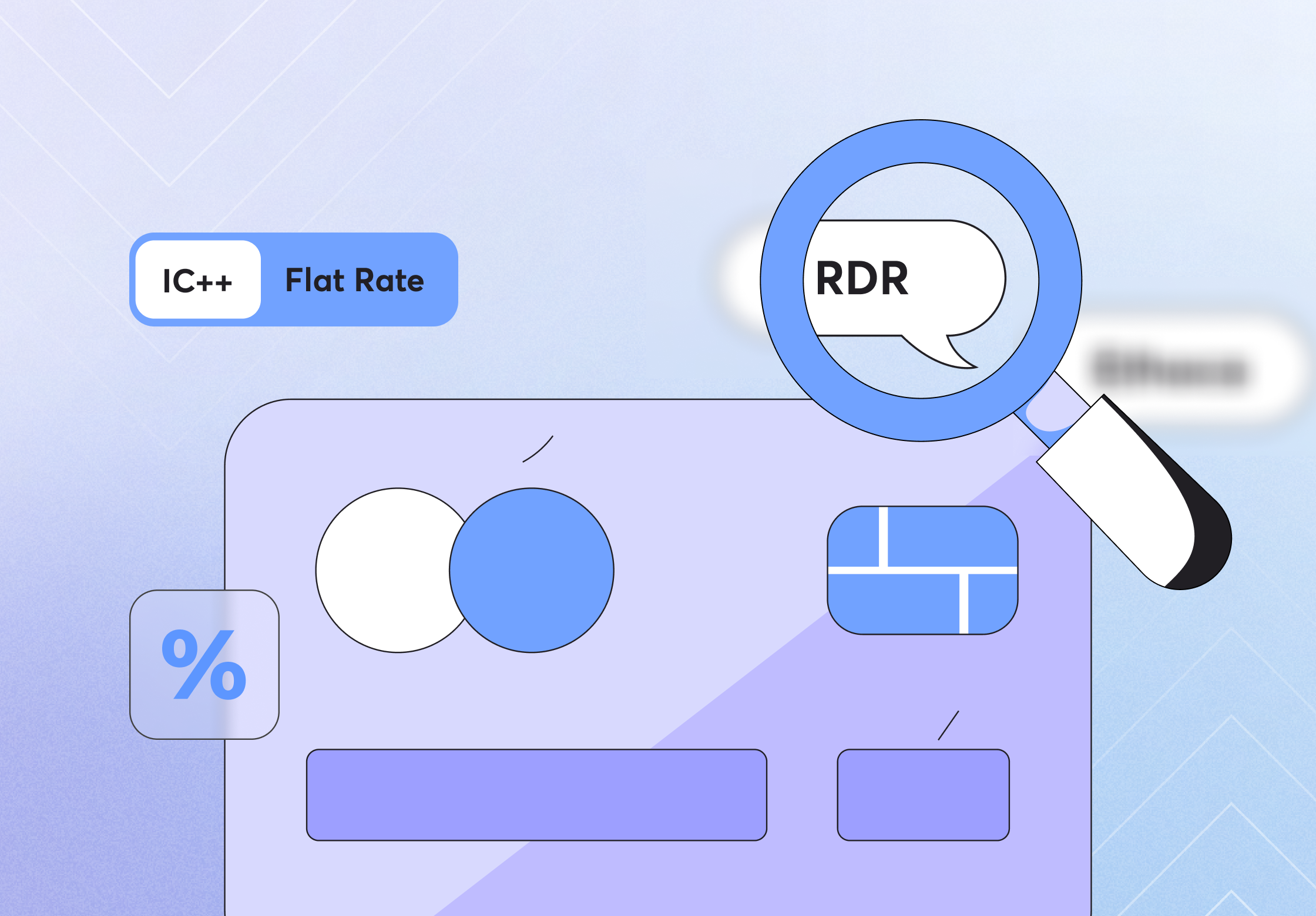
First, a brief explanation: These are products offered by Visa and Mastercard to help reduce chargebacks. Basically, before a consumer's dispute with their issuing bank escalates into a formal chargeback, RDR/Ethoca communicates with the issuer or acquirer, automatically deducting the amount from the merchant's account and issuing a refund. This prevents the dispute from becoming a chargeback, thereby reducing the chargeback rate.
RDR: A Visa product, costing approximately $4-5 USD per transaction.
Ethoca: A Mastercard product, costing approximately $18-19 USD per transaction.

For merchants with high chargeback rates, some payment companies may require them to use RDR and Ethoca at their own expense to reduce chargebacks before setting up integrations with third parties. So, this cost also needs to be considered.
04. Comprehensive Costs

Let's look at the issue of cost from a broader perspective. When a transaction fails, is it just the loss of the product's price? Let's walk through the complete customer journey from acquisition to successful payment.
1. $2,000 in advertising was spent to acquire 100 paying customers who reached the payment page. CAC (customer acquisition cost) = $20 per customer.
2. At the checkout page, nearly 30 transactions are lost due to reasons like: 'Website lacks security logo', 'High product price without installment options', 'the redirect after selecting a payment method causes churn', 'Slow page loading', 'Forgot card number and card not readily available', etc.
3. After the transaction enters risk control, it will be reviewed by the payment provider's risk control system, resulting in 2 more transactions lost.
4. The payment provider will then request the approved transaction to the card group, which will then request the issuing bank to perform 3DS authentication (Note:3DS is not mandatory in all countries). 3DS is mandatory in some countries, such as the EU, but not in the US. 3DS authentication aims to ensure the card is pay by consumers themselves. If verification is successful, there is no way to file a chargeback. If 3DS fails, another ~4 transactions are lost here.
5. The issuing bank must approve the transaction. For domestic payments, their risk checks are usually lower, so the approval rate is high. But for cross-border payments, the approval rate tends to drop by about 10–20%. he issuing bank might decline authorization due to perceived transaction risk/fraud, or simply because the consumer's card has insufficient funds/credit limit. Assuming a 90% authorization rate, another ~6 transactions are lost here.
6. There's also a real-time risk control rule that uses the user's perspective to determine whether to ship. This could lose another ~2 transactions. so,in the end,only 56 customers successfully complete their paymengt, generating $2,800 in revenue for a $2,000 investment, not even accounting for the cost of the goods.
7. Please note that there are still some chargebacks after the transaction, which will incur a chargeback fee of $15-25 plus the loss of the goods' value.
To summarize, key factors affecting your costs are:
Processing Fees
Checkout Page Conversion Rate
Transaction Authorization Rate
Balancing Risk Control Rules with Success Rates
3DS Dynamic Strategy
Chargeback Rate
Chargeback Dispute Win Rate













 Scroll to Top